Interview with Gwer aka. Rutger Paulusse

Interview with Gwer aka. Rutger Paulusse

Today we present this interview with the typography dutch master Gwer also known as Rutger Paulusse. We had a great talk about subjects as carrer, expectations, influences and life, hope you appreciate it.

You can see more from Rutger on the following links:
Website

Twitter

Instagram

Facebook

1) First of all I would like to thank you for doing this interview, it’s an honor for us to present more about you to our readers. I would like to start asking you about when your interest for graphic design and typography?

You’re welcome, thanks for having me! 🙂

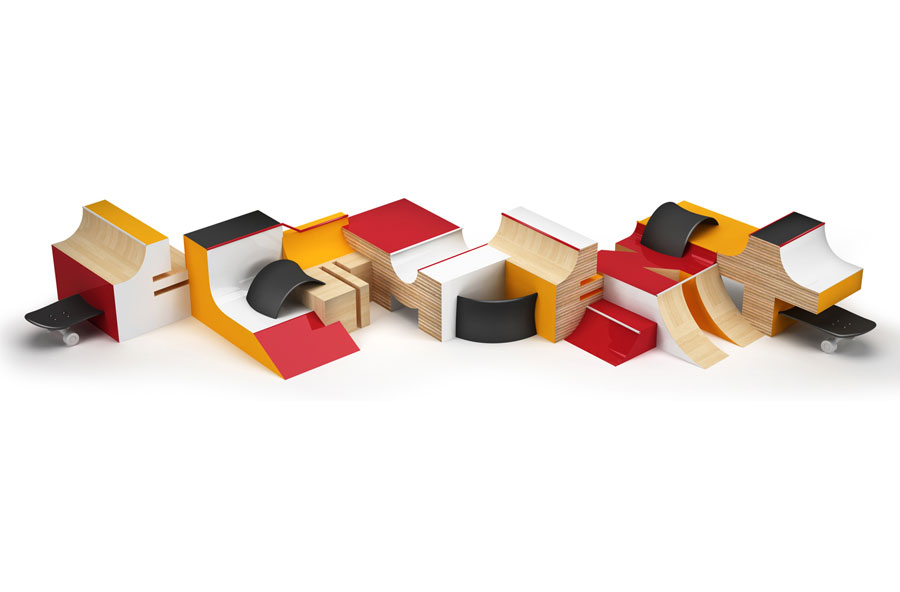
Basically my interest for typography started when I started skateboarding and was hanging around in the park. One of the older skateboarders was into graffiti and started teaching the new kids the basics of graffiti. He explained the anatomy of letters and the technique of how to use a spray can. I started drawing letters and that never stopped.

While studying event-management about 5 years later, I found out that I enjoyed the design work more as the actual management. I was more interested in designing the logos for the events and the artwork for the posters. Someone told me I could go to art-school, that really never occurred to me before, haha.

Unfortunately I was denied at art school, but after a year of trying to build a portfolio I finally got in.

It was an interesting year, I even did a painting course with some housewives, just to be able to create different kinds of work.

At art school I really started to get interested in graphic design and illustration, and the more I saw, the more I got into it.
2) Which artists do you use as reference?

There is so much inspiration and good work done these days. I love the people that are really into one style, its awesome to see how they can take one thing and practice and research one style in such a way that it gets very refined and developed.

I love the brush-lettering style of Joluvian and Sergey Shapiro, the more authentic calligraphy from Shoe and the work of Ged Palmer. I also love the work of Jordan Metcalf, Like Minded Studio, Luke Lucas, Seb Lester, Ken Barber and I can keep going shouting out names like that. Some less obvious artists I like are 86era and some talent here in the Netherlands such as Bart Vollebregt and Vincent de Boer. Also Attak, a studio form the Netherlands, keeps dropping great type work.

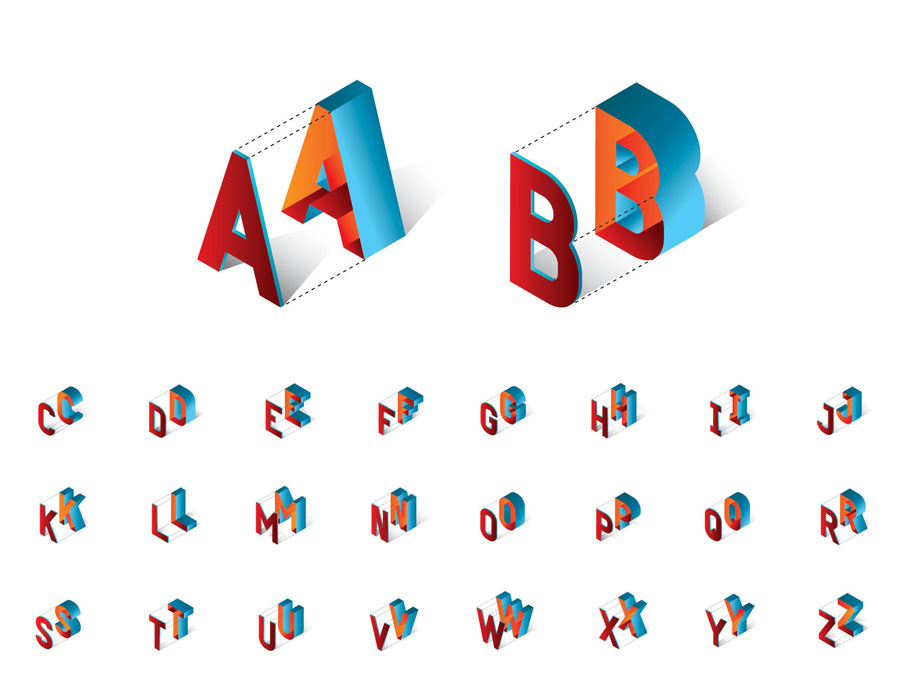
I also love the typographic CGI work from Chris Labrooy, Serial Cut and OnRepeat, that keeps inspiring me.
3) Your style is quite influenced by classic typography. How did you develop this style and how would you describe it?

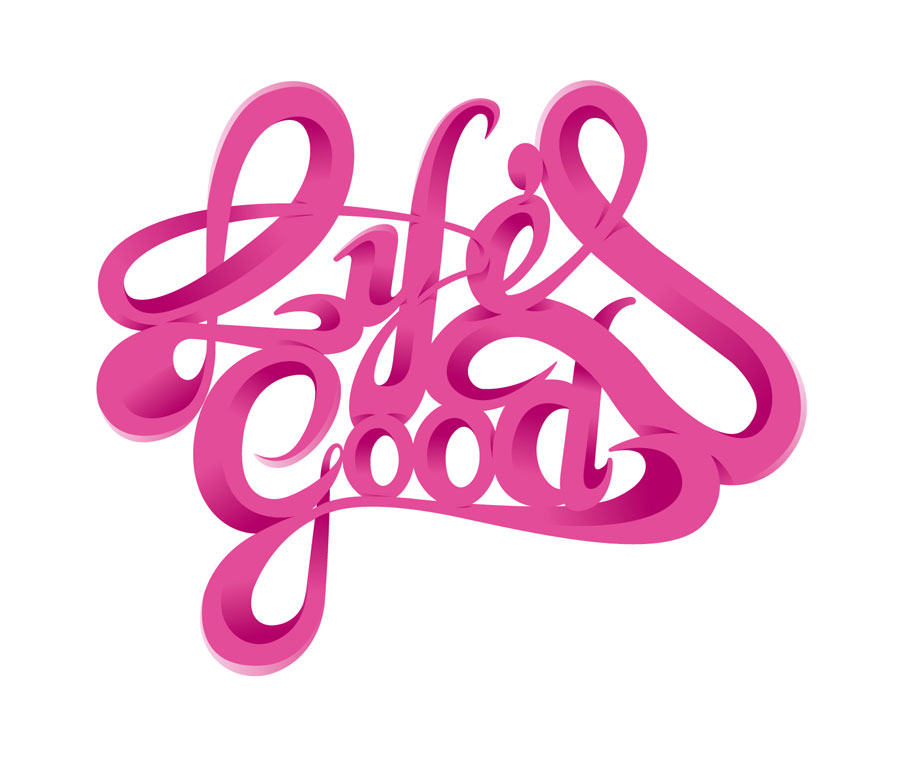
I was always drawing a lot, so that is basically the most important aspect for how stuff developed. LaterI started to practice the craft of calligraphy, which helped me to develop my style more. I think the path my type work took is kind of weird, but hey, whatever works. I started just drawing letters, later I started to design vector type stuff, and later, after many years I started to practice authentic calligraphy but also more illustrated type. The classic typography probably just was always something I loved to see, so it gets in your system.
4) Describe us a bit about your creative process while creating a piece.

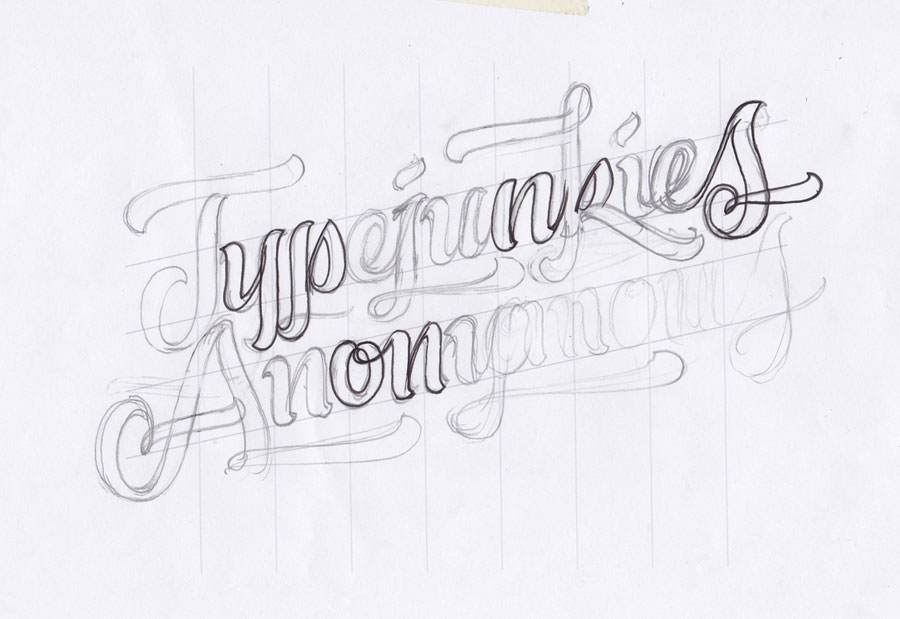
I always start with pencil or pen and ink, I think the sketching part is important to get your proportions and base right. It’s also good to get to know your shapes and how stuff could flow. Sketching is vey intuitive, so that helps with the kick-off of a project.

After that first step I scan, maybe tweak, print and keep going until I feel the base is right. Than I take it to the computer and continue the process. I really like the part on the computer as well, you can easily try different things and see what that does for the design. Like Eames said: ‘The details are not the details, they make the design’ and the computer is a perfect tool to try out different details quick and easy.

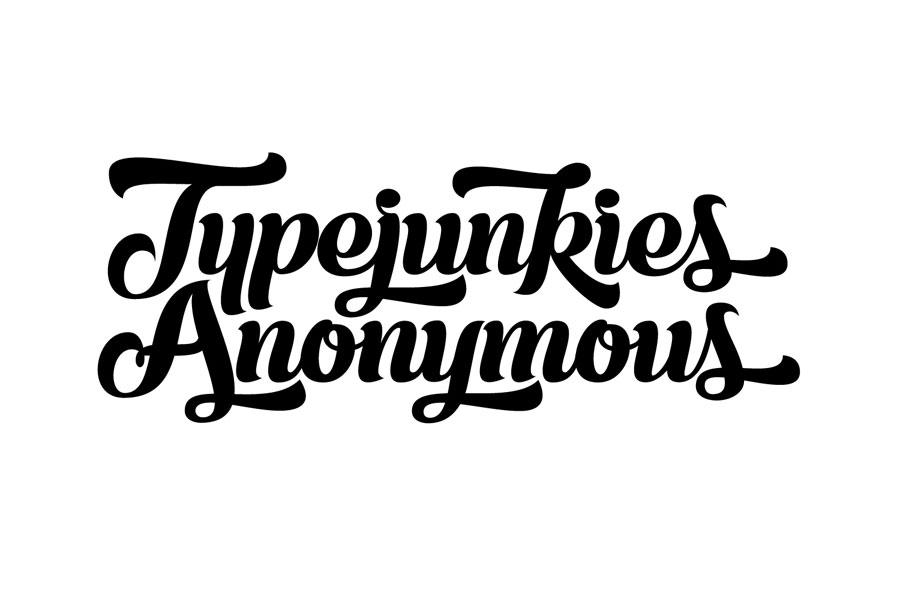
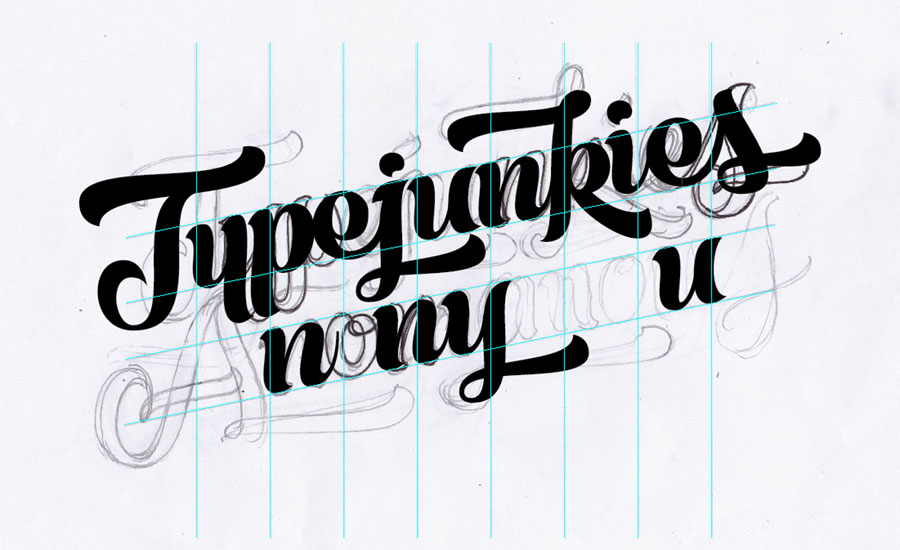
For the Typejunkies Anonymous logo I started with pen and ink to get the first proportions right,. On top of that sketch I started sketching out the letters and decided on the flow and dynamics. When I was happy with the base, I blew the whole thing up to decide on how the letters should look; how do the ends of the stem look, how do the descenders look and all that. Than it’s time to start to vectorize it. As you can see a lot of important decisions are made during the part in Illustrator, I even decided to make the whole thing horizontal again, instead of slanted as you can see in the final. That last choice was a functional one, while mocking-up the work-in-progress in different situations and applications I found out the crooked version wasn’t very convenient in use.
5)What’s would you consider the best moment on you career till now and what would be the worst one?

Going to intern and work in New York was very good, I worked with so many talented people; I learned so much. But also the decision afterwards to go back to Amsterdam to focus again on typography was a good one.

I guess there are no real bad moments in the path you take, you need to develop, and even sometimes something feels like a bad moment, afterwards you see the lesson in it. So even if stuff seems bad, it was probably very valuable for you anyways.
6) How do you describe your daily routine?

When I leave my house around 9 in the morning it’s a 10 minute drive on my noisy bike to the studio. Having a noisy bike really helps in Amsterdam, people (read: tourists) hear you coming, so that frees your way. I usually stay at the studio until 8 in the evening. I don’t have a pattern or routine at the studio, I do what needs to be done. From emailing clients and sending portfolios to sketching and designing to playing fuss ball.

7) What’s your favorite artwork till this date and why?

That is one hell of a question. It’s unfair to ask that a designer, hahaha.

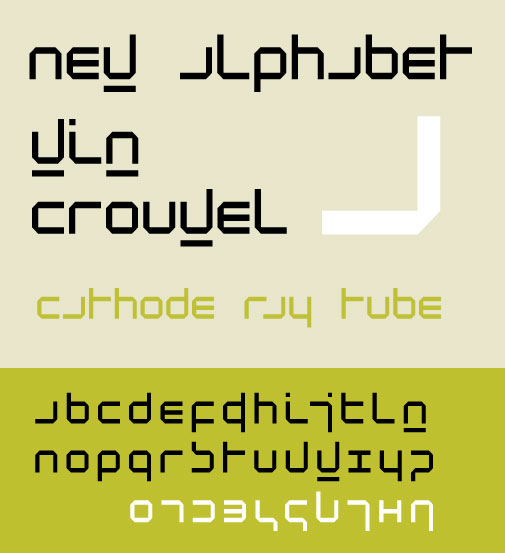
Well, there is so much stuff I like in different categories, but I think Wim Crouwel’s New Alphabet comes close to an all time favourite. It dates from 1967 and is an experimental typeface, way ahead of it’s time.

I guess it got me interested in graphic and type design. I mean look at it, 1967, what kind of hero you are, if you pull that off!
8) Tell us five lessons you believe are really important for every designer.

1. Kill your idols. Let stuff you really love go if it makes the whole thing better.

2. You get asked for what you do. Even if you don’t show it, the universe will give you the stuff you put energy in, if you like it or not.

3. Enjoy what you do. If you don’t like it, find something you like. So simple, but so true.

4. Presentation is ‘everything’. You can make amazing work look like a piece of shit by not presenting properly.

5. Have goals and dreams, but evaluate them once every while. Also evaluate if what you are doing at that very moment, is supporting what you believe in and what you want to do or where you want to go.
9) Tell us five websites that you like to visit

www.behance.net – You need a portfolio here, its perfect to keep updated about what is going on in any field of design and could create some nice exposure

www.myfonts.com – they have a lot of good stuff there

www.amsterdamadblog.com – Advertising is an interesting field, a lot of great and creative work is made, obviously I like the blog because it’s based in Amsterdam, but they have interesting posts that matter internationally as well.

www.theinspirationlist.com – all good stuff combined in 1 website, ain’t that something?

www.typeverything.com – The name says it all
10) Thanks again for your time, please leave a final message for the ones who are starting out on this kind of business.

Don’t look at what other people do too much, yes get inspired, but don’t try to become something that already exists or that you aren’t.

Also be sure to follow my social media feeds and stuff. 🙂

I will launch the Typejunkies Anonymous project soon, it will be a portfolio with only my lettering stuff in it. For an overview of all my work you can check www.gwer.nl.

Thanks a lot for the interview!

Posted in Blog | Comments Off on Interview with Gwer aka. Rutger Paulusse

The key to success is a creative brief

cb.thumbnailIt’s a sad fact that the biggest problem freelancers face, is disagreements with a client once a project has started.

It seems — judging by the amount of problems overheard by complaining designers — is that terms, changes, direction, and payments more often than not become roadblocks to a smooth and successful working relationship, usually ending what could be a continuing relationship between the freelancer, and client.

There is a simple, logical, and professional way for both parties to understand each other with complete transparency. Unfortunately, it’s a step many creatives skip.

Where do most creatives stand on paperwork? 

According to a recent survey, 39% of designers don’t require clients to sign on the dotted (or any) line, to take on a project. It’s a fairly safe assumption that a formal creative brief is another form most creatives don’t use. 

The same survey reveals that creatives prefer clients who know what they’re looking for at the outset of their design project, and score points with designers. 51% of designers surveyed consider that one of the most important characteristics in a client. 

The opportunity to be creative, and design something cool motivates 62% of designers to take on a project, compared to 48% who are swayed by fat paychecks and just 6% who consider a client’s prominence key. 

48% of designers say the lack of helpful feedback is among their biggest challenges in working with clients, while 42% point to clients’ lack of direction, and 25% indicate unrealistic expectations as major obstacles. 

With all of this in mind, how can a designer, or design staff, achieve all of these, and protect their rights, and sanity? The answer is a creative brief.


Why a creative brief solves problems 

Ask someone to sign a contract, and they will usually have a reason as to why they don’t want to sign. A contract contains hard, and fast rules of the business end of a project. The length of execution, change fees, payments and rights of use are some of the elements spelled out in a contract. With careful wording, a creative brief can hold all of that information, too! 

When first sitting down in the office, or conference room of a client, or meeting of the different players in your company, it’s time to start taking notes on what is said, asking certain questions, and… setting requirements, and boundaries. 

The key to success is a creative brief

At one firm, which was a very large corporation, we would all sit down in the conference room for a project meeting. Each department head would listen to the project scope, and desired results. Like a puzzle, each step depended on every department meeting the milestones set so the next department could pick up there, and supply the needed elements only they could provide, and so on around the company until it fell upon the art department.

If one department took too long with their part, like a tower with a missing part in the middle, the project would start to tumble down. Unfortunately, it would always be the art department that would be crushed under the weight of the steel beams of incompetence, supplied by other departments. 

The creative brief, written up, and sent out by the art department served to hold people responsible. In regular meetings during the project, it made it easier to ask other departments where they stood on their milestones, and why, inevitably, they were late. With a sympathetic, and strong project leader, responsibility, and meeting deadlines will make sure that creatives won’t have a week to create the final project when other departments were to take only two weeks out of a two-month project. 

It seems that at most companies this is the standard operating procedure. It’s rare that a project manager can or will keep tight reign on milestones. It’s even more rare that there’s a professional project manager at companies. Usually, someone will be assigned as a project manager, and they might not have enough experience, or the corporate level to demand strict adherence to milestones on a project. In a corporate setting, this usually leads to problems with getting a project done on time. In a freelance situation, your time is your money, and when you end up either working an extra week, or so on a flat fee, trying to charge for extra hours, or working an extreme rush to make a deadline, it’s a losing situation for you, and can lead to a project that probably won’t be your best work. In the end you’ll get the blame, and although unfair, well… welcome to business! 

So, how do you protect your reputation, income potential, and show yourself to be a valuable vendor to a client, or a competent project manager to your corporate boss? Start with a clear, and concise creative brief, and an iron fist! If written correctly, the information you include will leave no stone unturned and, no question unanswered. It’s not really hard. 

In the long run, a complete, and clear creative brief promotes transparency for all parties, and that is one of the things clients appreciate in a creative project, where they don’t fully understand the creative process.


How to get started 

The computer did not, as promised, make us a paperless society. Digital communications added to the lack of memory people have. Computers, in a big way, replaced our ability to remember, and store information in our own brains. An example is when a client doesn’t remember you saying something on an email, like asking to be paid, or trying to find out why the three-day period for a decision on final designs has taken 17 months.

Organization is the key. When I first started my design career, working both freelance, and on staff, I would create a job folder for each, and every assignment, and project. I started by labeling the folder, and then having a short creative brief written on the outside of the folder. It listed the following: 

  • Name of the project.
  • Date I received it.
  • Date the project was due.
  • Who was involved in the project, their names, phone numbers/extensions, email addresses.
  • Milestones for materials needed from these people.
  • From there, as the project proceeded, I would write down notes of what was happening on a daily basis.
  • Were we on time?
  • Were there requested changes, and by whom?
  • What milestones were missed, and by whom?
  • When files were delivered, and to whom. 

Within these file folders, I placed all printouts of the design stages, emails from other departments/people, and anything else that pertained to the project. Most of my bosses commended me for “knowing where the project was at any time.” 

At one employer, where incompetence was encouraged through rampant Peter Principle, I was told my file folders, “made people nervous.” 

The key to success is a creative brief

Of course people were nervous; it held people accountable. It’s not that the folders were set up to embarrass people… well, I admit that it was a part of it because the blame-game was big at that firm, and I had to protect myself from the lying finger-pointers, which really infuriated them to no end, but it was also the only way to keep a 100% on time delivery record. 

The plain fact is that these folders were invaluable to juggle what was sometimes two-dozen projects going on at once. Multitasking is nothing more than being organized, and there are tools one can use for that organization. The “Folders of Evidence, and Blame,” as my boss referred to them, were invaluable. 

While these were somewhat private creative briefs for myself, it’s best, when managing a project, especially on a freelance basis, to have a written brief for everyone to retain for their own folders, if they have one.


Creating a brief 

The key to success is a creative brief

I’ve looked at other creative briefs available on the web and frankly; I’m not impressed with what I saw. The examples available didn’t cover enough to really let the client know all of the steps nor did it cover the creative’s end of the project. Here’s a brief that you can use as a template for your next project:


Client/Client contact information:

Name, phone number, and email address for the person or the team on the client side.

Project:

Title of project

Prepared by:

Name, phone number and email address for the person who is responsible for in-house project management.

Background/Overview:

Detailed description of EVERYTHING that needs to be done! Include absolutely everything you can think of that will be included so any scope creep can be billed separately.

Timeline/Milestones:

Start time: Date goes here.

Client delivers images/logos for brochure, web banner, and web site. All proofread copy delivered by client. 

1st Milestone:

Sketches for design of all components – (set date).

Client revisions/approval by (set date).

Revised sketches delivered by (set date).

Client revisions/approval by (set date).

*Further revisions will change milestones. Adjusted brief will be resubmitted to client. 

2nd Milestone:

Second stage design – (set date).

Client revisions/approval by (set date).

Revised images delivered by (set date).

*Further revisions will change milestones. Adjusted brief will be resubmitted to client. 

3rd Milestone:

(Set date)

Presentation of completed designs to client for viewing/approval.

*Further revisions will change milestones. Adjusted brief will be resubmitted to client.

4th Milestone:

(Set date)

Uploading, or delivery to printer (set date).

Payments:

Fee: $ (total fee for project)

Deposit: $ (set fee – should be one-third to half of total fee). Deposit due at start time.

1st Milestone: $ (percentage of total fee)

2nd Milestone: $ (percentage of total fee)

3rd Milestone: $ (percentage of total fee)

4th Milestone: $ (*ideally, this should be the final percentage of the entire fee for the project)

* Changes beyond the first round (further changes) will be billed separately at a rate of $ (set hourly rate) per hour.

Rights:

Client purchases all rights to design/copyright for work rendered. Transfer of copyright is contingent upon full payment.


This, of course, is just the basics as an example. The more you list, going into the smallest details, the more you will protect yourself against “misunderstandings” as the project proceeds. The biggest problem with any project is the “but I said…” or “I thought this would be…” and the ever popular, “I thought we were going to add this?”

While a contract spells out rights, payments, and promises kept only through legal wording, a creative brief shows all parties how the project will proceed, and, most importantly, how payments will be made. With a contract, people may see it at the beginning of the project, but won’t look at it again until you are threatening to sue them for breaking your agreement. The creative brief reminds people every step of the way that you won’t work for free, excessive changes will cost more.

Still, a creative brief may need to include the demographics of the customer/target audience. Although I haven’t experienced it myself, I have heard from other designers about clients who set the design standards of a project, but later complain that the work doesn’t reflect their consumer base.


Make the language clear

One example I can relate about a language misunderstanding was a company president who kept using the word, “sophisticated” for a design project. With every design sketch, she would say, “No, no, no! I want sophisticated!”

After eleven attempts at “sophisticated,” I finally asked her to show me some examples of what she liked, and I would take it as inspiration. After she pointed out a few examples, I realized she was wrong, and severely nuts! What she really wanted was something whimsical. This is a great, and painful, example of miscommunication, and how much work just one word — one descriptor can cause. I was on staff at the company so it wasn’t as big of a deal as if it was a freelance assignment, which would have been a disaster if it were a flat fee. It was just an extreme waste of time, and a tick that showed up on my annual performance review as, “failed to satisfy the president’s wishes in eleven rounds of changes.”

This is yet something else that needs to be included in the creative brief. Words can be misinterpreted, or misused. Sometimes people use their hands to describe what they want, moving them up, and down, and sideways to specify size, layout, or “sophistication.” Your job, as the creative lead, is to pull out from the odd babbling what it is they really mean, and place it into the written brief so there are no extra rounds of design that cut into your fee, or take you away from other projects.

Demographics are another important point to clarify for the creative brief. Who is the intended audience? The answer might be “everybody,” and it might be “18-28 year-old men who live in their parent’s basement.”

Remember to ask these questions so when you are ready to write up your brief to present to the client, there will be no holes that might trip up the project down the road. If there are any holes, or misunderstandings, the time… and money, will come out of your end, and that can add up over a year to thousands of dollars.


When trouble arises

Anyone who tells you they have never had a problem with a design project is either a liar, or a psychotic. There are projects that run up against certain questions either during, or after a project is complete. Usually it’s getting paid when a client questions how much work has actually been done, and why the project costs more then $79.

The key to success is a creative brief

Seriously, we laugh at that statement but we all know it to be true. In cases where you must sit down with the client, and go over all aspects of the project, and show proof of requests, changes, and costs incurred by you, the folder will hold all of the answers. Naturally, the client might not agree that the answer they sent in an email, telling you that all designs are approved is really what they meant, but that leads to another avenue — court.

If you are forced to go to court or mediation, the project folder is a legal dream — maybe an orgasm! Everything in writing, in one place and ready to present as the record of each step. Even if you have no contract (you should have one!), the project folder, and the creative brief will show intent, agreement, and steps taken to complete the project.

You will also find that creative briefs are handy for repeat clients. In web design, it’s important to retain clients to service their ever-changing web needs. As technology evolves, and companies grow, the original creative brief serves to remind you of how the client prefers to work with you. Reviewing past project files, and briefs can also remind you when it’s time to contact a client to pitch updates to their site. It’s a wonderful tool that’s valuable to your business. So, run out to your local office supply store, buy some file folders, design a creative brief sheet with your logo on it, and you’ll see how easy a great creative brief, and project folder can make your life and business.


Do you use a creative brief? Has it helped your projects? Let us know your experiences in the comments.

Images ©GL Stock Images

10 One-Page Bootstrap Themes from DX Themes – only $10!
The key to success is a creative brief

Source


Posted in Blog | Comments Off on The key to success is a creative brief